
Plant Profile & Key Characteristics
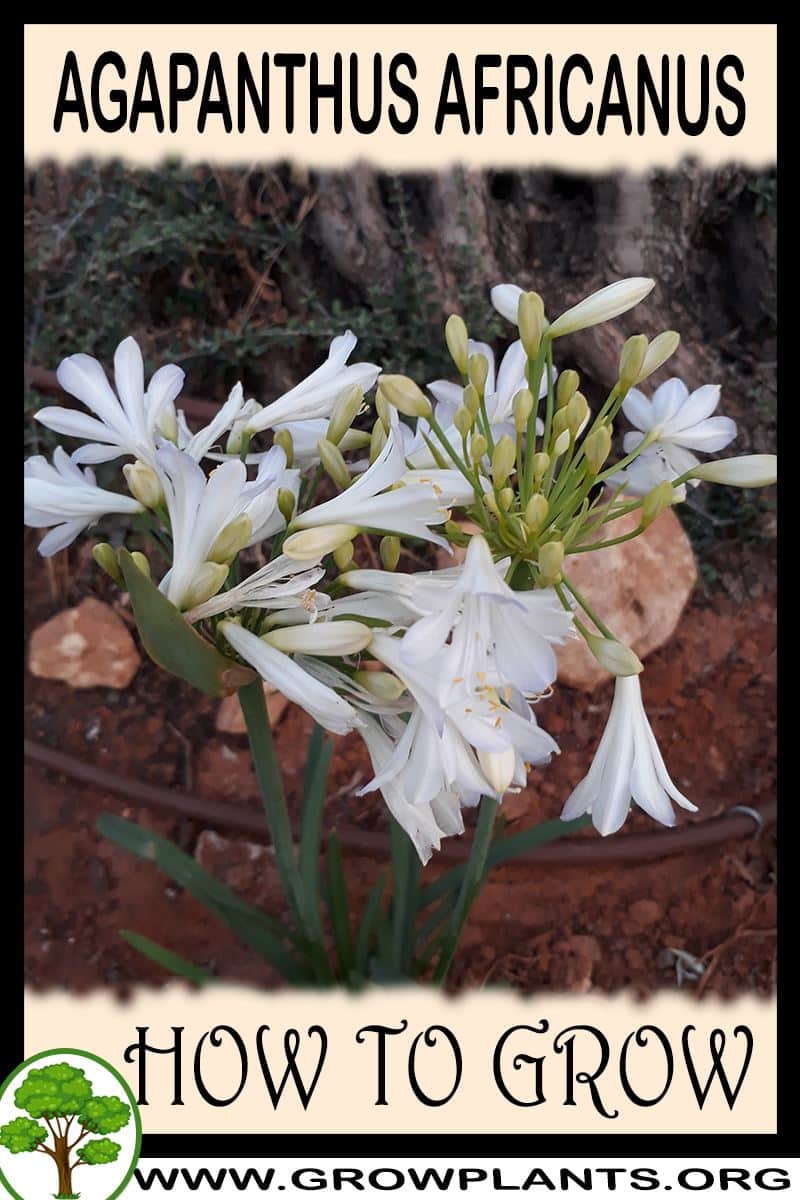
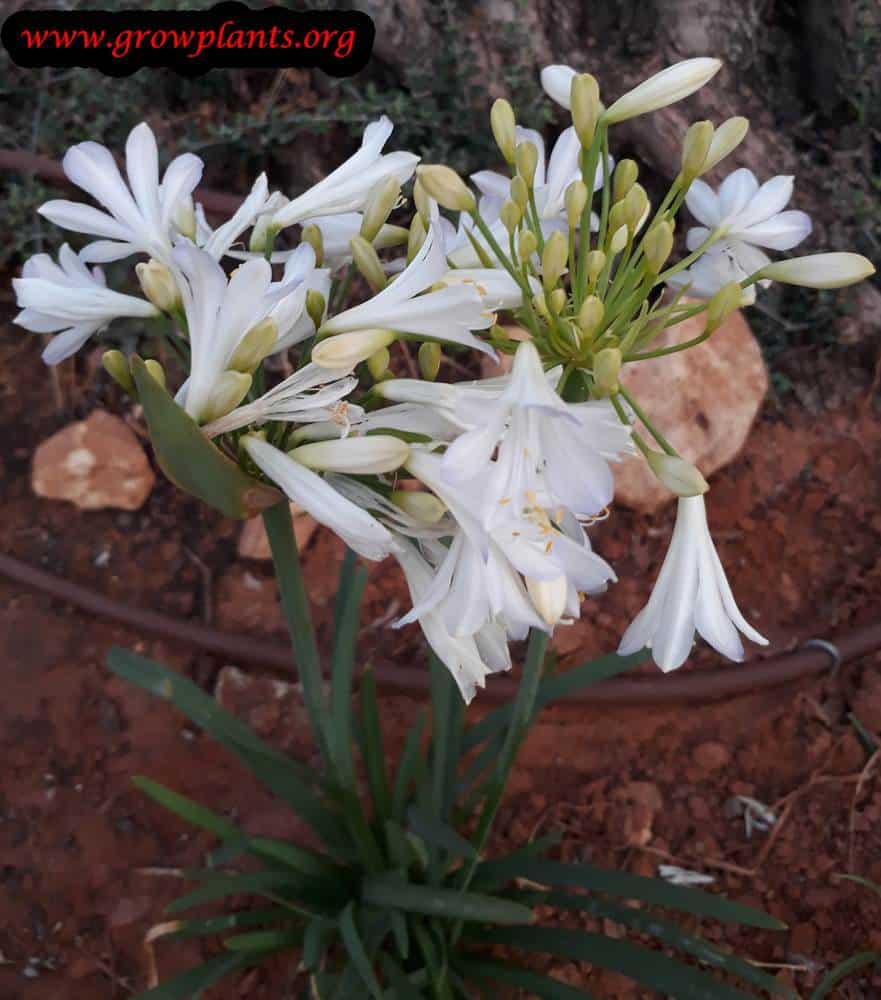
Overview: Agapanthus africanus (African lily) is an evergreen, clump-forming herbaceous perennial reaching 20-70cm, 8-32 inches. It is grown chiefly as a drought-tolerant ornamental, prized for its rounded umbels of purple, pink, blue or white flowers held on tall stalks.
Quick Specifications
| Specification | Attribute |
|---|---|
| Plant Type / Life Cycle | Perennial (herbaceous geophyte) |
| Foliage Type | Evergreen |
| Mature Size | 20-70cm, 8-32 inches tall, clumps of similar spread |
| Growth Rate | Moderate to fast |
| Root System | Rhizomatous – fleshy rhizomes and thick roots |
| Toxicity | Toxic – sap and rhizomes contain irritant saponins that can irritate skin and mouth |
| Hardiness | USDA zone 6+ |
Growth Form & Structure
- Height & Spread: In the ground clumps reach 20-70cm, 8-32 inches tall with a similar spread; well suited to large containers, where growth stays more restrained.
- Growth Habit & Form: Clump-forming herbaceous perennial; strap-like leaves emerge in a radiating basal fan, with flowers carried on tall, erect bare scapes above the foliage.
- Lifespan & Maturity: Long-lived perennial; clumps thicken over the years and can be lifted and divided to renew flowering.
Anatomy & Physical Features
- Leaves & Foliage: Strap-like, linear leaves in a radiating basal fan, mid-green (some forms variegated green and white).
- Flower Characteristics: Rounded umbels of trumpet-shaped purple, pink, blue or white flowers on tall bare stalks through the warm season.
Primary Uses & Landscape Value
- Functional & Ornamental Roles: Ornamental borders and mass planting, drought-tolerant and xeriscape schemes, container displays and cut flowers. Note that some cultivars can be invasive.
Care Guide: Planting, Soil & Watering
Overview: Agapanthus africanus (Lily of the Nile) is a tough, drought-tolerant perennial that flowers best in full sun to partial shade and grows in a wide range of climates (hardy in zone 6 and warmer). It prefers a fertile, well-draining soil kept evenly moist through the growing season, yet tolerates short dry spells once established.
Quick Care Requirements
| Requirement | Ideal Condition |
|---|---|
| Planting Season | Spring through autumn, in the warm season |
| Growth Rate | Moderate to Fast |
| Soil Type | Fertile, well-draining soil that holds some moisture |
| Water Need | Moderate — keep evenly moist in growth, drier in winter |
Planting & Establishment
- Best Planting Season: Plant during the warm season, from spring through autumn, giving the roots time to settle before winter cold.
- How to Plant:
- Hole Preparation: Dig a hole a little wider than the root mass so the fleshy roots can spread easily into loosened, free-draining soil.
- Soil Amendments: Work in compost or well-rotted organic matter to enrich the bed while keeping drainage sharp; add grit on heavy soils.
- Planting Depth: Set the crown just at or barely below the soil surface — planted too deep, the clump is slow to flower.
- Growth Speed & Expectations: Establishes at a moderate to fast pace in good conditions, bulking up into fuller clumps over a couple of seasons.
Soil, Watering & Drainage Care
- Soil Mix & Drainage Needs: Needs soil that stays moist but drains freely — waterlogged ground rots the fleshy roots. In containers use a rich, free-draining potting mix with good drainage holes.
- Watering Schedule & Technique:
- Young / Newly Planted: Water regularly to keep the soil evenly moist while the plant establishes.
- Established: Water moderately through the growing and flowering season; once settled it shrugs off short dry spells.
- Seasonal Adjustments: Water more in summer heat and cut back in winter as growth slows.
Climate, Light & Hardiness
Agapanthus africanus (African lily) is an adaptable, drought-tolerant perennial for subtropical, Mediterranean, temperate, desert, and tropical climates, growing in full sun to half shade. It is evergreen and hardy from USDA zone 6 upward, with site data specifically noting it needs winter lows to stay above about −1°C / 30°F.
Quick Climate Specifications
| Climate Zones | Subtropical, Mediterranean, Temperate, Desert, Tropical |
|---|---|
| USDA Hardiness Zones | 6 and warmer |
| Approx. Survival Minimum | Approximately −1°C / 30°F |
| Frost Tolerance | Low to Moderate |
| Light Conditions | Full Sun to Half Shade |
Sunlight & Light Exposure
Optimal Light Setup
Full sun to half shade both suit Agapanthus; full sun generally produces the most flower stalks.
Temperature Extremes & Hardiness
USDA Hardiness & Regional Limits
Hardy from USDA zone 6 upward, staying evergreen in mild-winter climates. Site data specifies that winter temperatures should stay above roughly −1°C / 30°F for reliable performance.
Frost Sensitivity
Foliage can be damaged by frost below its stated minimum; the thick rhizome is more cold-tolerant than the leaves and can regrow even if top growth is lost.
Growing in Pots, Balconies & Indoors
African lily (Agapanthus africanus) is a 20-70 cm (8-32 in) clumping perennial that the grower grows in containers but not as a houseplant. It is a superb patio-tub plant – it actually flowers best when a little pot-bound – but it needs strong outdoor light.
Quick Details
- Container Size: A 10-20 L (3-5 gal) pot; it likes to be somewhat crowded, which boosts flowering
- Indoor Suitability: Not a houseplant; it needs full outdoor light to bloom
- Best Spot: Full sun to half shade
- Soil & Drainage: Rich, free-draining mix
- Watering in Pots: Average – water freely in growth, then keep drier over its winter rest
Indoors & On the Windowsill
- Houseplant limits: Not listed as an indoor plant – it needs strong light and a cool, drier winter rest to flower.
- Overwintering: In cold areas a pot lets you move it to a cool, frost-free spot for winter.
- Safety: The sap can irritate skin and it is mildly toxic if eaten – keep it from children and pets.
On a Balcony or Patio
- Light & wind: Give it the sunniest spot; walls, railings and paving throw back heat so pots dry quickly – check moisture often and shelter or stake it on an exposed, windy balcony.
- Practicalities: Account for the weight of a full pot and make sure drainage water can run away freely without staining the balcony.
Choosing the Pot, Soil & Long-Term Care
- Pot & drainage: Use a pot with strong drainage holes and skip a standing-water saucer to avoid root rot; terracotta breathes and dries faster, while glazed or plastic holds moisture longer.
- Potting mix: Well-aerated and organic-rich – a quality potting mix, or peat/coir with perlite or vermiculite.
- Feeding: Potted plants use up their soil faster as nutrients leach out with each watering – feed lightly through the growing season.
- Repotting: Leave it snug – only pot on or divide every few years when it bursts the pot, since crowding encourages flowering.
Fertilizing & Feeding
A drought-tolerant evergreen geophyte that flowers reliably on light feeding; established clumps often do well with minimal supplemental fertilizer.
Quick Fertilizing Specs
| Feeding Level | Light feeder |
|---|---|
| Main Nutrient Priority | Balanced feeding during active leaf growth, tapering off once flowering finishes |
| Best Feeding Period | As new leaf growth begins ahead of the summer bloom |
| Organic Options | Compost or well-rotted organic matter worked into moist, well-drained soil |
| Micronutrients | Usually supplied by a complete fertilizer; correct specific issues only when diagnosed |
| Soil pH | Adapts to a wide range of well-drained garden soils |
| Reduce/Stop Feeding | Taper off feeding after flowering finishes as growth slows into the cooler months |
Feeding by Growth Stage
Active leaf growth ahead of bloom
Support fresh strap-like leaf growth from the rhizome as the clump builds toward flowering.
| Nutrient direction | A balanced, general-purpose fertilizer applied lightly to support steady leaf and root growth. |
|---|---|
| Timing | As new leaf growth resumes in spring. |
| Frequency | A light feeding as growth resumes is usually enough to carry the plant into bloom. |
| Fertilizer types | A balanced complete garden fertilizer, applied lightly, Compost or well-rotted organic matter |
| Precautions | Avoid heavy nitrogen feeding, which can favor lush leaves over flower production. |
Trumpet-flower umbel bloom
Support strong flower stalks and full umbels of trumpet-shaped blooms.
| Nutrient direction | Favor a lower-nitrogen, potassium-forward feed to support sturdy flower stems rather than extra leaf growth. |
|---|---|
| Timing | Through the summer bloom period. |
| Frequency | Light, infrequent feeding through the bloom period is generally sufficient. |
| Fertilizer types | A lower-nitrogen, potassium-forward complete fertilizer |
| Precautions | Excess nitrogen during bloom tends to reduce flower stem sturdiness and flower count. |
Post-bloom rest period
Let the clump settle after flowering as growth naturally slows going into the cooler months.
| Nutrient direction | None – withhold fertilizer once flowering finishes and growth slows. |
|---|---|
| Timing | From the end of flowering through the cooler, slower-growing months. |
| Frequency | No feeding at this stage. |
| Fertilizer types | No feeding at this stage – allow the clump to rest undisturbed |
| Precautions | Do not fertilize once flowering has finished; resume only when active leaf growth clearly picks up again. |
Nutrient Deficiency Signs & Corrections
Pale, yellow-green leaves and noticeably weaker leaf growth than expected for the clump’s age.
| Possible causes | low soil nitrogen, overcrowded, congested clumps competing for nutrients, poor soil organic matter |
|---|---|
| Appears first on | older, outer leaves |
| What to check | recent feeding history, clump density and crowding, soil organic matter |
| Possible correction | Apply a balanced complete fertilizer lightly, and divide congested clumps if crowding is severe. |
Leaf margins yellow or scorch and flower stalks come weaker or fewer than expected.
| Possible causes | low soil potassium, an imbalanced, nitrogen-heavy feeding history, leaching in light, sandy soils |
|---|---|
| Appears first on | older leaf margins |
| What to check | recent feeding balance, soil texture and drainage, flower stalk strength and bloom count |
| Possible correction | Shift to a lower-nitrogen, potassium-forward complete fertilizer. |
New leaves emerge yellow while the veins remain green.
| Possible causes | high soil pH limiting iron availability, poorly drained soil, root stress from overly wet conditions |
|---|---|
| Appears first on | youngest leaves |
| What to check | soil pH, drainage, recent watering pattern |
| Possible correction | Correct pH toward a more favorable range and apply a chelated iron product per its label if chlorosis persists. |
Pruning, Training & Seasonal Maintenance
Agapanthus africanus is an evergreen, strap-leaved perennial with no woody growth to manage, so its maintenance is limited to two simple jobs done year-round: removing old or damaged leaves at their base as they appear, and cutting the flower scape down once bloom has faded. Because flowers rise on leafless stalks straight from the crown, deadheading does not affect the plant’s vegetative growth. Prompt removal of spent scapes also matters here specifically because some cultivars of this species are noted as invasive self-seeders.
Quick Pruning & Maintenance Specs
| Pruning Tolerance | High (regrows readily from the crown) |
| Primary Pruning Window | Year-round for old leaf removal |
| Secondary Maintenance Window | Late summer/autumn, after bloom, for scape removal |
| Typical Frequency | Spot-clean old leaves as needed; deadhead each scape once its bloom fades |
| Main Objective | Tidy foliage and prevent unwanted self-seeding on invasive-prone cultivars |
| Mature Plant Priority | Prompt scape removal after bloom; ongoing leaf cleanup |
| Best Tool Type | Precision snips for leaves; bypass secateurs for the tougher, more fibrous flower scapes |
Pruning by Plant Age & Size
Newly Established
Leave a newly planted clump alone beyond removing any damaged leaves; let it settle in before the first bloom cycle.
Young / Formative
No structural training applies — this is a herbaceous fan-forming clump with no framework to shape.
Mature / Established
Routine work is deadheading spent scapes at the base and removing yellowing or damaged leaves as they occur.
Seasonal Pruning Schedule
Ongoing Sanitary
Objective: keep the clump tidy year-round. Remove: individual old, yellowing or damaged leaves, cut at their base. Do not remove: healthy green leaves or the crown itself. Expected response: continuous fresh leaf growth from the crown. Flowering impact: none.
Post-Flowering
Objective: prevent unwanted seed spread and tidy the clump once bloom is over. Remove: the spent flower scape, cut down near the base once it has fully faded. Do not remove: scapes still in bloom or in early seed development if seed is deliberately wanted. Expected response: no effect on next season’s bloom, which comes from new scapes. Flowering impact: prompt removal on self-seeding-prone cultivars specifically limits unwanted spread.
Special Growth to Remove
Spent flower scapes and old leaves are the only growth removed. On cultivars known to self-seed aggressively, removing scapes promptly after bloom (rather than letting seed heads mature and disperse) is the main tool for keeping the clump from spreading beyond where it is wanted.
Container & Small-Space Pruning
Container-grown plants are maintained the same way — remove spent scapes and old leaves at their base. Because this species forms thick, fleshy roots, a potted clump will fill its container over time; this is managed by periodic division rather than by pruning the top growth.
Tools
- Precision snips for routine leaf cleanup.
- Bypass secateurs for cutting the tougher, more fibrous flower scapes at the base.
Tool Hygiene & Disease Risk
Routine risk only — clean, sharp tools are sufficient. The main pests noted for this species (snails and slugs) are not spread by pruning tools.
Cut Placement & Technique
Cut the flower scape down close to soil level once it has fully faded, and remove individual old leaves at their base rather than tearing them away, which can damage the crown.
Post-Pruning Care
No special aftercare is needed beyond normal watering; this species does not require feeding after routine deadheading or leaf cleanup.
Common Pruning Mistakes
- Leaving spent flower scapes on self-seeding-prone cultivars, allowing unwanted spread through the garden.
- Tearing old leaves away instead of cutting them cleanly at the base, which can injure the crown.
- Cutting back healthy evergreen foliage hard, as if it were a fully dormant, top-dying perennial — this species does not need or benefit from a full seasonal cutback.
When NOT to Prune
Avoid cutting flower scapes down before bloom has fully finished, and avoid removing scapes early if seed is deliberately being saved.
Recommended Tools (by task)
- Mature clump, routine leaf cleanup — precision_snips: clean, controlled cuts on individual leaves.
- Mature clump, spent flower scapes at the base — bypass_secateurs: enough cutting power for the tougher, more fibrous scape tissue.
Propagation Guide
Agapanthus africanus is most reliably increased by dividing its fleshy rhizomatous clumps, which keeps named forms true and establishes quickly; seed is also easy and reasonably true for this species, though seedlings take longer to reach flowering size. Overall propagation is easy by either method.
Quick Propagation Specs
| Best Propagation Method | Clump/rhizome division |
| Alternative Methods | Seed |
| Propagation Difficulty | Easy |
| Seed True-to-Type | Usually true-to-type for this species |
| Vegetative True-to-Type | Yes |
| Best Propagation Season | Spring, or after flowering in summer/autumn |
| Seed Germination Time | Typically several weeks under warm conditions |
| Germination Temperature | About 18–22°C (64–72°F) |
| Seed Sowing Depth | Sow shallowly, just covering the seed |
Growing from Seed
Sowing Season
Spring, in line with the plant’s spring–autumn planting window.
Sowing Depth & Orientation
Sow shallowly, just covering the seed with soil.
Germination Conditions
Warm, evenly moist conditions around 18–22°C (64–72°F).
Germination Time
Typically a few weeks; seedlings are slow to reach flowering size, often taking a few years.
Division, Offsets, Pups & Suckers
Lift and divide established clumps in spring or once flowering has finished, when the plant is not in active bloom. Split the fleshy rhizomatous rootstock into sections that each carry several leaf fans and healthy roots, discarding any thin or rootless pieces. Replant promptly at the same depth; divisions establish readily given the plant’s fast to medium growth rate, and this is the standard way growers report the plant spreading vigorously (some cultivars are noted as invasive).
Bloom & Flower Guide
Quick Details
- Bloom Season: Spring and summer
- Time to First Bloom: From a division, usually within a year or two once the clump settles; longer from seed
- Flower Appearance: Rounded umbels of small trumpet flowers in blue, purple, pink or white, on tall bare stalks
- Edibility: Not edible – the sap is irritating to skin and the plant is mildly poisonous if eaten
Detailed Blooming Overview
African lily is grown for its bold summer flowerheads, held well above the strappy foliage on tall, bare stalks. Each head is a rounded cluster (umbel) of many small trumpet-shaped flowers in blue, purple, pink or white, sometimes opening into an almost spherical ball. The flowers are long-lasting in the garden and in the vase, and they draw bees and butterflies through the warm months.
Flower Characteristics
- Umbels of small, trumpet-shaped flowers on tall, leafless stems.
- Colours include blue, purple, pink and white.
- Long-lasting and attractive to pollinators.
Bloom Care & Thinning
- Safety first: The sap can irritate skin and eyes and the plant is mildly toxic if eaten, so handle with care and keep it out of food.
- Managing the bloom: Cut spent flower stalks down to the base to keep the clump tidy; established, slightly crowded clumps tend to flower most freely.
Bloom Health & Protection
- Agapanthus gall midge: Where it occurs, this small midge lays in the flower buds, which then discolour, distort and fail to open. Picking off and destroying affected buds promptly is the main control, as it breaks the pest’s cycle.
Pests, Diseases & Troubleshooting
Overview: Agapanthus is a robust, generally healthy South African perennial whose fleshy roots resent nothing so much as cold, wet, badly drained soil. Its most damaging problems are the modern agapanthus gall midge that deforms flower buds, slugs and snails on soft new growth, and root or crown rot from waterlogging. The true species A. africanus; evergreen and among the more tender, so drainage and frost care matter most. Rely on good drainage, hygiene and hand-control first, keeping any sprays for confirmed outbreaks.
Quick Troubleshooting Overview
| Issue / Pest | Main Symptom | Primary Solution |
|---|---|---|
| Agapanthus gall midge | Buds discolour, swell, deform and fail to open; maggots inside | Pick off and destroy affected buds/heads promptly; garden hygiene |
| Slugs & snails | Ragged holes and slime trails on new leaves and buds | Hand-pick at night, barriers, traps, remove damp hiding places |
| Mealybugs / scale | White cottony tufts in leaf bases; honeydew and sooty mould | Wipe off; horticultural oil or insecticidal soap |
| Root & crown rot | Yellowing, collapsing fans; soft, brown, foul roots and base | Improve drainage, lift & trim rot, water far less |
| Poor / no flowering | Healthy leaves but few or no flower stems | More sun, avoid high-nitrogen feed, don’t disturb roots |
Common Pests & Management
- Agapanthus Gall Midge (Enigmadiplosis agapanthi): a recently emerged and increasingly serious specific pest.
- Symptoms: tiny cream-to-orange maggots feed inside the developing flower buds, which discolour, swell, distort and brown, and fail to open; whole heads can be ruined while foliage looks fine. The only agapanthus-specific pest of note.
- Prevention & Control: vigilance and hygiene are key — inspect forming buds and pick off and destroy (bin or burn, do not compost) any deformed heads before the larvae drop to pupate in the soil. Clear plant debris to break the cycle; there is no reliable home spray, so prompt removal is the main defence. Report and isolate new infestations.
- Slugs & Snails (Cornu aspersum, Deroceras spp.):
- Symptoms: irregular ragged holes chewed in soft young leaves, emerging shoots and flower buds, with tell-tale silvery slime trails; worst in damp, shaded, spring conditions on fresh growth.
- Prevention & Control: hand-pick after dark or after rain; remove damp hiding places, set beer traps, and ring plants with grit, copper tape or wool pellets. Encourage birds, frogs and hedgehogs; use iron-phosphate pellets sparingly if pressure is high.
- Mealybugs (Planococcus citri):
- Symptoms: soft white cottony clusters tucked into the tight leaf bases and crown, especially on container and indoor plants; sticky honeydew and black sooty mould follow, and heavy colonies weaken the fans.
- Prevention & Control: dab colonies with an alcohol-dipped cotton bud; spray thoroughly with horticultural oil or insecticidal soap, repeating every 1–2 weeks. Quarantine new plants and encourage ladybirds.
- Lily Borer / Amaryllis Caterpillar (Brithys crini): chiefly where agapanthus grows in or near its native range.
- Symptoms: boldly banded black-and-yellow caterpillars feed gregariously, first grazing the leaves then tunnelling down inside the leaf bases and into the fleshy rhizome, which can rot; fans yellow and collapse.
- Prevention & Control: inspect and hand-pick the conspicuous caterpillars and egg clusters early; cut out and destroy bored, rotting crowns. A biological Bacillus thuringiensis spray controls young larvae on the foliage.
- Red Spider Mite (Tetranychus urticae):
- Symptoms: on hot, dry or under-glass plants, fine pale stippling and a dull bronzed cast to the leaves, with faint webbing in bad cases; growth weakens.
- Prevention & Control: raise humidity and hose the foliage; treat with insecticidal soap or horticultural oil and introduce predatory mites under cover.
- Thrips (Heliothrips haemorrhoidalis):
- Symptoms: silvery flecking and speckled black excrement on leaves and petals, sometimes distorting flowers; a mostly cosmetic nuisance.
- Prevention & Control: monitor with blue sticky traps, hose down foliage, and spray insecticidal soap or horticultural oil if needed.
Diseases & Fungal Issues
- Root & Crown Rot (Phytophthora & Pythium spp.; Fusarium):
- Symptoms: the main disease of agapanthus — fans yellow, wilt and topple, and the fleshy roots and crown turn soft, brown-black and foul; almost always the result of heavy, waterlogged or persistently cold-wet soil.
- Treatment & Management: prevention through drainage is decisive — plant in free-draining soil or raised beds, avoid winter waterlogging, and don’t overwater containers. Lift affected clumps, cut away all rotten tissue back to firm white roots, replant in fresh, well-drained soil, and reduce watering.
- Anthracnose & Leaf Spots (Colletotrichum, Cercospora spp.):
- Symptoms: brown to reddish spots and blotches, sometimes with yellow haloes or sunken centres, on the leaves in warm, wet, crowded conditions; largely cosmetic but disfiguring.
- Treatment & Management: improve airflow and spacing, avoid overhead watering, and remove and destroy spotted leaves; a copper fungicide only where spread is rapid.
- Grey Mould / Botrytis (Botrytis cinerea):
- Symptoms: fuzzy grey-brown mould on spent flowers, buds and damaged tissue in cool, damp, still conditions, rotting the flower head.
- Treatment & Management: deadhead and clear faded blooms and debris, improve ventilation, and avoid wetting the flowers; rarely needs more than good hygiene.
- Viral Streaking (Agapanthus/Nerine-type viruses):
- Symptoms: yellow streaks, mottling or breaking in the leaves that does not respond to feeding; spread by aphids and by division of infected clumps.
- Treatment & Management: no cure — rogue out and destroy clearly virused plants, control aphids, and sterilise cutting tools between plants; propagate only from healthy stock.
Growing Difficulties & Abiotic Problems
- Poor or No Flowering:
- Cause & Symptoms: lush leaves but few or no flower stems — usually too much shade, too much nitrogen feed, plants too young, or a clump recently divided or disturbed (agapanthus flower best when settled and even a little root-bound).
- Correction Strategy: give full sun, switch to a higher-potassium (or tomato-type) feed, leave clumps undivided for several years, and be patient with recently moved plants.
- Waterlogging & Root Rot:
- Cause & Symptoms: heavy, wet, poorly drained soil — especially cold and wet through the dormant season — suffocates and rots the fleshy roots, yellowing and collapsing the fans.
- Correction Strategy: improve drainage with grit and organic matter or use raised beds and containers; ease off watering in cool weather and never leave pots standing in water.
- Frost & Cold Damage:
- Cause & Symptoms: deciduous types are fairly hardy but evergreen agapanthus are tender — hard frost blackens and mushes the foliage and can kill exposed crowns, worsened by wet.
- Correction Strategy: mulch crowns in cold areas, grow tender evergreens in pots to shelter over winter, and keep plants on the dry side through the cold.
- Chlorosis & Nutrient / Sun Issues:
- Cause & Symptoms: pale yellowing leaves from waterlogging, poor nutrition or (rarely) a very dry pot; abrupt full sun on soft indoor growth can scorch leaf tips.
- Correction Strategy: correct drainage and feed in the growing season with a balanced then higher-potassium feed; acclimatise indoor-raised plants to strong sun gradually.
What Helps — Products & Tools
A simple kit handles most issues: horticultural (mineral) oil and insecticidal soap for mealybugs, mites and thrips; iron-phosphate slug pellets, beer traps and copper barriers for slugs and snails; Bacillus thuringiensis (Bt) for lily-borer caterpillars; a copper fungicide for leaf spots and anthracnose; blue sticky traps to monitor thrips; and, above all, grit and compost or raised beds to guarantee the sharp drainage that prevents root rot. Prompt hand-removal of gall-midge-infested buds remains the key defence, as no reliable home spray exists for it.