Plant Profile & Key Characteristics
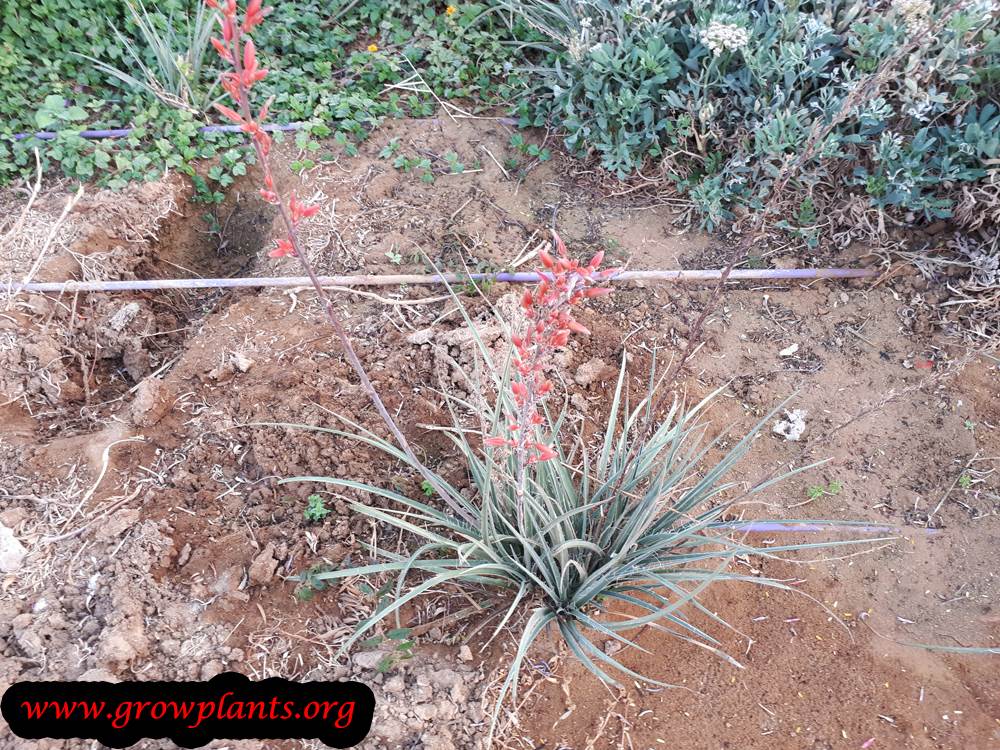
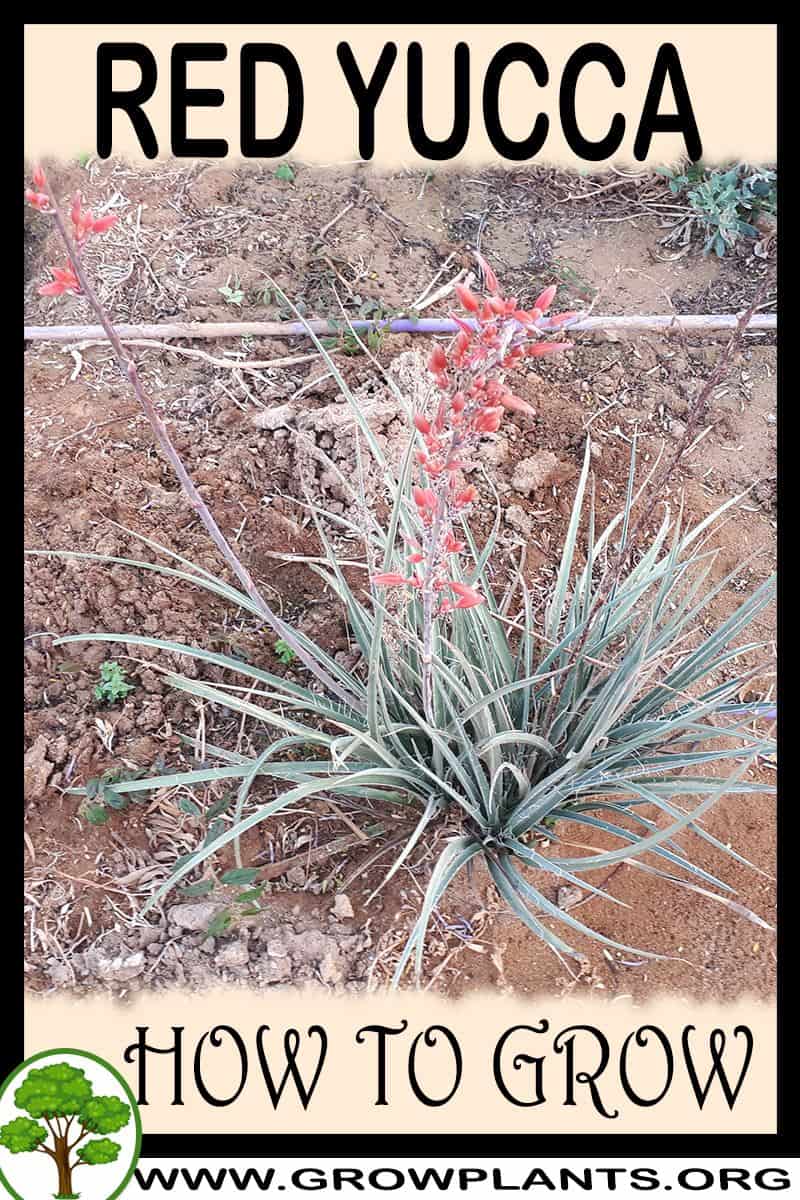
Overview: Red yucca (Hesperaloe parviflora) is an evergreen, drought-tolerant succulent forming grassy clumps of leaves 0.5-1.5 m tall, above which rise 1-2 m spikes of red or yellow tubular flowers. It is a tough xeriscape ornamental for zones 5-10.
Quick Specifications
| Specification | Attribute |
|---|---|
| Plant Type / Life Cycle | Perennial (evergreen succulent) |
| Foliage Type | Evergreen |
| Mature Size | Foliage 0.5-1.5 m (20-60 inches); bloom stems 1-2 m (3-6 feet) |
| Growth Rate | Moderate to slow |
| Root System | Clump-forming with deep, fibrous roots |
| Hardiness | USDA zones 5-10 |
Growth Form & Structure
- Height and Spread: Leaf clump 0.5-1.5 m (20-60 inches) with flower stems reaching 1-2 m (3-6 feet); also grown in containers (not suited as an indoor houseplant).
- Growth Habit and Form: Clumping, grass-like succulent rosette sending up tall, arching flower spikes.
- Lifespan and Maturity: Long-lived, low-water perennial that bulks slowly to moderately into a dense clump.
Anatomy & Physical Features
- Leaves and Foliage: Green, spear-shaped succulent leaves edged with curling white fibres (‘hairs’).
- Flower Characteristics: Red or yellow tubular flowers borne along tall inflorescence stems in spring and summer (full detail in the Bloom accordion).
Primary Uses & Landscape Value
- Functional and Ornamental Roles: Drought-tolerant ornamental for xeriscapes, borders, containers and pollinator gardens.
Care Guide: Planting, Soil & Watering
Overview: Red yucca is a tough, drought-tolerant desert succulent that thrives in full sun and sharply drained soil. It needs very little water once established and resents wet, heavy ground.
Quick Care Requirements
| Requirement | Ideal Condition |
|---|---|
| Planting Season | Spring through autumn (warm season) |
| Growth Rate | Slow to moderate |
| Soil Type | Sharply drained sandy or gravelly soil |
| Water Need | Low – deep but infrequent, allow to dry out between waterings |
Planting & Establishment
- Best Planting Season: Plant during the warm season, spring through autumn, so roots establish before cold weather.
- How to Plant:
- Hole Preparation: Dig a hole as deep as the root ball and a little wider.
- Soil Amendments: Little enrichment is needed; if the soil is heavy, add grit or coarse sand to improve drainage rather than rich organic matter.
- Planting Depth: Set the crown at soil level, keeping it slightly high so water drains away from the base.
- Growth Speed & Expectations: Slow to moderate – forms a substantial clump over several years.
Soil, Watering & Drainage Care
- Soil Mix & Drainage Needs: Needs very free-draining, gritty soil; waterlogging causes rot. In pots use a cactus or succulent mix.
- Watering Schedule & Technique:
- Young / Newly Planted: Water occasionally through the first season to establish the roots.
- Established: Water deeply but infrequently, letting the soil dry completely between waterings; it is highly drought-tolerant.
- Seasonal Adjustments: A little more in extreme summer heat, almost none in winter.
Climate, Light & Hardiness
Red yucca (Hesperaloe parviflora) is an exceptionally tough, drought-tolerant succulent perennial suited to desert, subtropical, Mediterranean, and temperate climates. It needs full sun and is unusually cold-hardy for a yucca relative, tolerating winters through USDA zone 5.
Quick Climate Specifications
| Climate Zones | Desert, subtropical, mediterranean, temperate |
|---|---|
| USDA Hardiness Zones | 5–10 |
| Light Conditions | Full sun |
| Frost Tolerance | High for the established rootstock |
Sunlight & Light Exposure
Optimal Light Setup
Needs full sun for compact growth and the best flowering of its tall, tubular bloom spikes.
Extreme Heat Tolerance
Highly heat- and drought-tolerant once established, well suited to hot desert and dry temperate summers.
Temperature Extremes & Hardiness
USDA Hardiness & Regional Limits
Hardy from zone 5 to 10, which is notably cold-tolerant for a yucca-relative – established plants shrug off hard winter freezes.
Cold Damage & Winter Protection
Excellent drainage matters through winter, since cold combined with wet, poorly drained soil poses more risk than cold alone; no other protection is generally needed within its hardiness range.
Wind, Humidity & Microclimate
Dry-Air Tolerance
Very well suited to the dry air of desert and Mediterranean climates.
Wind Tolerance
High – its stiff, spear-shaped leaves handle open, windy sites well.
Growing in Pots, Balconies & Indoors
Red yucca is a tough, succulent-leaved desert plant, excellent in a sunny container but not a houseplant – it needs baking full sun that no room provides, and its flower stems shoot up to about 2 m. In a gritty, free-draining pot it makes a striking, drought-proof patio specimen.
Quick Details
- Container Size: 15-30 L (4-8 gal); a stable, weighty pot balances the tall flower stems
- Indoor Suitability: Not a houseplant – a full-sun desert plant
- Best Spot: Full sun
- Soil & Drainage: Very free-draining, gritty mix; it hates wet feet
- Watering in Pots: Sparing – let it dry out well between waterings; highly drought-tolerant
Indoors & On the Windowsill
- Houseplant limits: Not a houseplant – it demands the strong, direct sun of an open, hot site to stay tight and to flower, which indoor light cannot match.
- Overwintering: It is fairly hardy but dislikes cold, wet soil; in wet-winter areas move the pot under an eave or into a bright, cold, dry porch to keep the roots on the dry side.
On a Balcony or Patio
- Light & heat: Give it the hottest, sunniest, most exposed spot – it revels in reflected heat from walls and paving. A heavy or wide-based pot keeps the tall bloom stems from toppling in wind.
- Practicalities: A filled pot is heavy once watered – check the balcony can take the load, and stand it where drainage runoff will not be a nuisance. It needs very little water, so runoff is rarely an issue.
Choosing the Pot, Soil & Long-Term Care
- Pot & drainage: A 15-30 L pot with strong drainage holes and never leave it standing in a saucer of water, or the roots rot. Terracotta breathes and dries faster; glazed or plastic holds moisture longer. Sharp drainage matters more than pot material.
- Potting mix: A gritty, free-draining mix – cactus/succulent compost, or potting mix cut heavily with perlite, grit or coarse sand.
- Feeding: Feed only sparingly in the growing season; it thrives on lean conditions.
- Repotting: Slow-growing and happy pot-bound – repot only every few years.
Fertilizing & Feeding
A light feeder and drought-tolerant landscape succulent: minimal, low-nitrogen feeding during active growth is enough to support its spear-shaped foliage and tall flowering stems without encouraging soft, weak growth.
Quick Fertilizing Specs
| Feeding Level | Light feeder |
|---|---|
| Main Nutrient Priority | Minimal, low-nitrogen feeding to support steady, sturdy growth |
| Best Feeding Period | Spring through summer during active growth |
| Organic Options | A light topdressing of compost worked into well-drained soil at planting |
| Micronutrients | Usually supplied by lean, well-drained soil; correct specific issues only when diagnosed |
| Soil pH | Tolerates a wide range; performs best in lean, well-drained soil |
Feeding by Growth Stage
Active growth and flowering
Support sturdy foliage and the tall flowering stems typical of this drought-tolerant plant, without pushing soft, weak growth.
| Nutrient direction | A low-nitrogen, sparingly applied fertilizer, since this plant is adapted to lean soil and heavy feeding works against its natural form. |
|---|---|
| Timing | Spring through summer as new leaves and flowering stems develop. |
| Frequency | This plant rarely needs feeding; a light application is enough if growth looks sparse. |
| Fertilizer types | A low-nitrogen fertilizer formulated for cacti and succulents, used sparingly |
| Precautions | Avoid nitrogen-heavy feeding, which can produce floppy, weak leaves and reduce this plant’s natural drought tolerance. |
Cool-season dormancy
Let the plant rest through the cool season without pushing tender new growth it does not need.
| Nutrient direction | None – withhold fertilizer while the plant is dormant or growth has slowed for winter. |
|---|---|
| Timing | Autumn through winter. |
| Frequency | No feeding at this stage. |
| Fertilizer types | No feeding at this stage – resume light feeding once active spring growth returns |
| Precautions | Do not fertilize during dormancy; unused nutrients can build up in the soil or encourage rot in cool, wetter weather. |
Nutrient Deficiency Signs & Corrections
Soft, yellowing, or collapsing leaf bases with a mushy, discolored crown.
| Possible causes | poorly drained or heavy soil, overwatering or overly frequent feeding that keeps soil too moist, fungal root pathogens favored by soggy conditions |
|---|---|
| Appears first on | the crown and lower leaf bases |
| What to check | soil drainage, recent watering frequency, firmness of the crown when checked |
| Possible correction | Improve drainage, let soil dry appropriately between watering, and withhold feeding until the plant recovers. |
Leaves look pale and growth is unusually sparse over an extended period.
| Possible causes | very lean soil over many seasons with no feeding, poor root establishment, heavy competition from surrounding plants |
|---|---|
| Appears first on | overall foliage color and density |
| What to check | feeding history, soil fertility, competition from nearby plants |
| Possible correction | Apply a light, low-nitrogen fertilizer during active growth rather than assuming a more significant problem. |
Healthy leaves but few or no tall flowering stems form during the normal bloom period.
| Possible causes | overly rich soil or excess nitrogen feeding favoring leaves over flowers, insufficient sunlight, the plant is still young or newly established |
|---|---|
| Appears first on | absence of flowering stems despite otherwise healthy foliage |
| What to check | recent feeding amount and nitrogen content, sun exposure, how long the plant has been established |
| Possible correction | Reduce nitrogen feeding to keep growth lean, and ensure full sun exposure. |
Pruning, Training & Seasonal Maintenance
Red yucca (Hesperaloe parviflora) is a single-crown, rosette-forming evergreen perennial grown for its narrow arching leaves and tall flowering spikes. It tolerates almost no cutting of its leaf rosette — each leaf is permanent structural and photosynthetic tissue radiating from one central growing point — so pruning is confined to removing what is already dead and deadheading spent bloom spikes, as needed year-round, with no effect on the plant’s basic shape or size.
Quick Pruning & Maintenance Specs
| Pruning Tolerance | Low (dead material and spent bloom stalks only; never cut healthy leaves) |
| Primary Pruning Window | Any time, as dead leaves or spent flower stalks appear |
| Typical Frequency | A few times per year |
| Main Objective | Remove dead leaves and spent bloom stalks; preserve the rosette form |
| Young Plant Priority | None – do not remove any leaves from a young plant |
| Mature Plant Priority | Cut spent flower stalks at the base once flowering is finished; trim only fully dead leaves |
| Best Tool Type | Bypass secateurs or loppers, plus heavy gloves and eye protection |
Pruning by Plant Age & Size
Newly Established
No pruning — every leaf is needed while the plant builds its root system.
Young / Formative
No structural training; the rosette form is fixed by the plant’s single growing point and cannot be shaped by cutting.
Mature / Established
Bloom spikes can appear repeatedly across the warm season; cut each spike out at its base once it has finished flowering and dried. Remove individual leaves only once they are fully brown, cutting at the base rather than trimming green tips for tidiness.
Special Growth to Remove
- Fully dead or dried leaves — cut at the base.
- Spent flower stalks — cut at the base once dry, which also removes a tall stalk that would otherwise persist as a dead eyesore for a long time.
Container & Small-Space Pruning
Tolerated in containers; in a pot the no-tip-trimming rule applies even more strictly, since this plant relies on its full rosette and has limited capacity to regenerate lost leaf area from a constrained root system.
Tools
- bypass_secateurs — for flower stalks and dead leaf bases.
- loppers — if a dead leaf base or old flower stalk is too thick or fibrous for secateurs.
Heavy gloves and eye protection are essential, since the leaf margins and tips are noted as sharp.
Tool Hygiene & Disease Risk
Routine — no specific disease-transmission risk is noted for this species; clean tools are sufficient.
Cut Placement & Technique
Cut dead leaves and spent flower stalks as close as can be done safely to their point of origin at the base of the rosette, without nicking neighbouring healthy leaves.
Heavy Pruning & Rejuvenation
Not tolerated: this is a single-growing-point plant, like its succulent/agave relatives, so hard cutting into the crown does not stimulate regrowth and can kill the growing point entirely. There is no rejuvenation pruning for this species.
Post-Pruning Care
No special aftercare beyond normal light watering; because of the sharp leaves, keep cut material away from foot traffic areas until disposed of.
Common Pruning Mistakes
- Trimming green leaf tips for a “neater” look, which permanently damages that leaf since it will not regrow or heal invisibly.
- Handling the plant without gloves, given its sharp leaf margins and tips.
- Leaving spent bloom stalks in place for a full year past flowering instead of removing them once dry.
When Not to Prune
There is no season to avoid for removing dead material, but avoid cutting a flower stalk while it is still green or actively flowering, since the plant can continue producing blooms on it.
Recommended Tools (by task)
- bypass_secateurs — for spent flower stalks and dead leaf removal at the base.
- loppers — for thicker old flower-stalk bases where present.
Propagation Guide
Red yucca is most commonly grown from seed, which the site notes is not necessary to supplement with vegetative propagation, making seed the simplest route for most growers. Dividing basal offsets from a mature clump is a practical alternative when an exact match to a parent plant is wanted, and overall this is an easy plant to propagate by either method.
Quick Propagation Specs
| Best Propagation Method | Seed |
| Alternative Methods | Division of basal offsets |
| Propagation Difficulty | Easy |
| Seed True-to-Type | Usually true-to-type (may vary if grown near other Hesperaloe species or hybrids) |
| Vegetative True-to-Type | Yes |
| Best Propagation Season | Spring, once frost danger has passed (within the site’s spring–autumn planting window) |
Growing from Seed
Seed Handling & Viability
Store seed cool and dry; no special pre-treatment is typically needed beyond that.
Sowing Season
Spring is best, once the weather has warmed; the site’s broader planting window covers spring through autumn.
Germination Conditions
Warm temperatures with consistent moisture until germination; no specific depth, temperature or germination-time data is recorded on site for this species.
Seedling Care
Grow seedlings in full sun in a well-drained mix, and water sparingly once established, matching this species’ low water needs.
Division, Offsets, Pups & Suckers
Mature clumps produce basal offsets (pups) over time. Separate these with a sharp spade, making sure each division keeps its own roots and several leaves attached; best done in spring. Wear protective gloves when handling this plant, since the site notes its leaves are sharp.
Bloom & Flower Guide
Quick Details
- Bloom Season: Spring into summer, often continuing into autumn
- Time to First Bloom: Young plants usually take a few years to reach their first flowering
- Flower Appearance: Tubular flowers in coral-red or yellow, strung along tall, arching flower stalks
- Edibility: Grown as an ornamental
Detailed Blooming Overview
Red yucca sends up tall, wand-like flower stalks that arch well above its grassy, succulent foliage, hung with tubular coral or yellow blooms. It flowers over a long stretch of the warm season and is a magnet for hummingbirds.
Flower Characteristics
- Tubular flowers in red or yellow, carried along branched stalks, as the grower notes.
- Held high above the foliage for a striking, airy display.
Bloom Care & Thinning
- Prolong the show: Leave the stalks in place while they keep opening flowers along their length.
- Tidying: Cut spent flower stalks right back at the base once finished.
- Water: Extremely drought tolerant – it flowers best in full sun with lean, well-drained soil.
Pests, Diseases & Troubleshooting
Overview: Red yucca (Hesperaloe parviflora) is a tough, drought-adapted desert perennial that is almost entirely pest- and disease-free. Its only real weakness is root and crown rot from overwatering or heavy, poorly drained soil; insects are occasional and minor. Site it in full sun with sharp drainage and water sparingly, and it will look after itself — there is no need to spray a healthy plant.
Quick Troubleshooting Overview
| Issue / Pest | Main Symptom | Primary Solution |
|---|---|---|
| Root / crown rot | Soft, mushy, yellowing crown; collapse | Cut back watering; improve drainage; remove rot |
| Aphids | Colonies on tender flower stalks; honeydew | Hose off; insecticidal soap if needed |
| Scale insects | Small hard bumps on leaves; sooty mould | Scrape or wipe off; horticultural oil |
| Mealybugs | White cottony tufts in leaf bases | Alcohol swab; oil spray for larger outbreaks |
Common Pests & Management
- Aphids (Aphis spp.):
- Symptoms: Small green or dark aphids clustering on the soft, emerging flower stalks and buds, with sticky honeydew; leaves themselves are rarely bothered.
- Prevention & Control: Knock them off with a jet of water, encourage ladybirds and lacewings, and only resort to insecticidal soap if colonies persist on the bloom spikes.
- Scale insects (Diaspididae / Coccidae):
- Symptoms: Small, immobile brown or grey bumps along the tough leaves that do not rub off, sometimes with sooty mould on honeydew.
- Prevention & Control: Scrape or wipe off light infestations; smother heavier ones with horticultural oil. Rarely serious on an established plant.
- Mealybugs (Pseudococcidae):
- Symptoms: White cottony tufts tucked into the leaf bases and crown, with honeydew.
- Prevention & Control: Dab with rubbing alcohol or treat with horticultural oil; check for root mealybugs if a container plant declines for no clear reason.
Diseases & Fungal Issues
- Root & crown rot (Phytophthora / Pythium / Fusarium):
- Symptoms: Yellowing, softening and browning at the crown and base, collapse of leaves, and a mushy, sometimes smelly root ball — almost always from overwatering, heavy clay, or planting too deep.
- Treatment & Management: Prevention is the cure — plant high in gritty, fast-draining soil, water deeply but infrequently, and never let it sit wet. Remove rotted tissue and improve drainage; badly affected crowns rarely recover.
- Leaf spot (minor, various fungi):
- Symptoms: Occasional small brown or grey spots on leaves in prolonged damp, humid conditions; largely cosmetic.
- Treatment & Management: Improve airflow and avoid overhead watering; remove badly marked leaves. Fungicide is almost never justified.
Growing Difficulties & Abiotic Problems
- Overwatering:
- Cause & Symptoms: Too much water or heavy soil causes yellowing, soft crown and rot. Correction Strategy: Treat as a xeric plant — deep, infrequent watering and excellent drainage.
- Shy flowering:
- Cause & Symptoms: Few bloom spikes in too much shade or overly rich, wet conditions. Correction Strategy: Grow in full sun and lean soil; it flowers best when a little stressed.
- Cold / wet winter damage:
- Cause & Symptoms: Though hardy, it can suffer crown rot where winters are cold and wet. Correction Strategy: Ensure winter drainage; avoid mulch piled against the crown.
What Helps — Products & Tools
A healthy red yucca needs almost nothing. Keep insecticidal soap or horticultural oil on hand for the rare aphid, scale or mealybug outbreak on the flower stalks, and focus your effort on drainage — gritty planting soil and restrained watering are the real “products” that keep this plant thriving.