

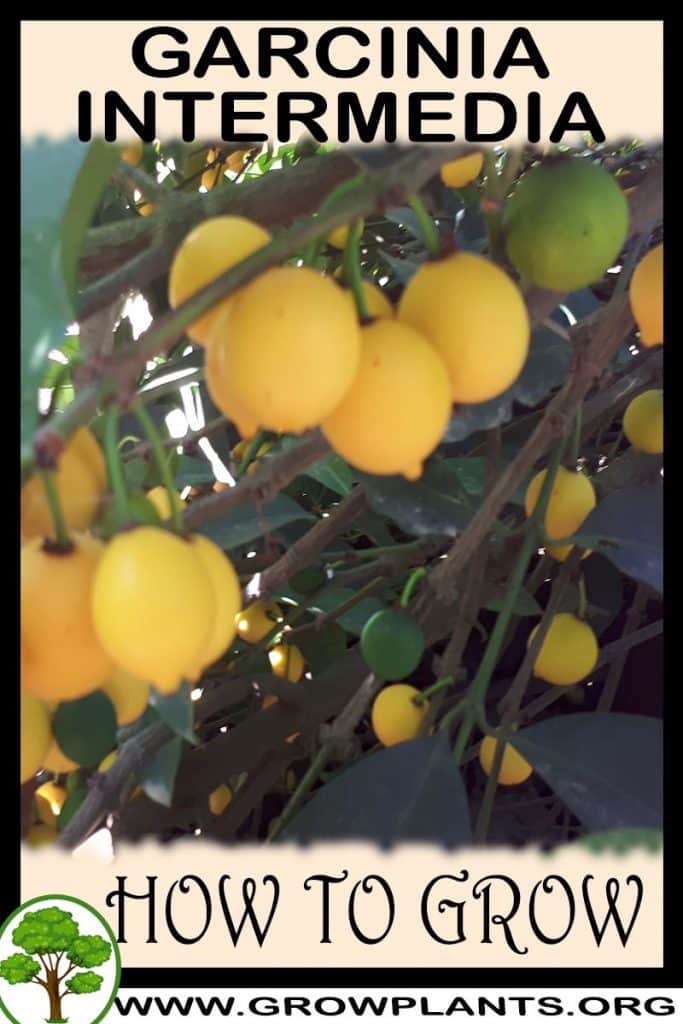
Plant Profile & Key Characteristics
Overview: A small evergreen tree, 2–5 m tall, with glossy green elliptic foliage. Grown for its edible orange, sweet-and-sour fruit and as an ornamental; it exudes a sticky latex when cut.
Quick Specifications
| Specification | Attribute |
|---|---|
| Plant Type / Life Cycle | Perennial (evergreen tree) |
| Foliage Type | Evergreen |
| Mature Size | 2–5 m (7–16 ft) tall |
| Growth Rate | Moderate |
| Toxicity | Non-toxic – fruit edible (cut stems exude a sticky, non-edible latex) |
| Hardiness | USDA zone 10b and warmer |
Growth Form & Structure
- Height & Spread: A compact tree 2–5 m tall; can be kept smaller and grown in a large container.
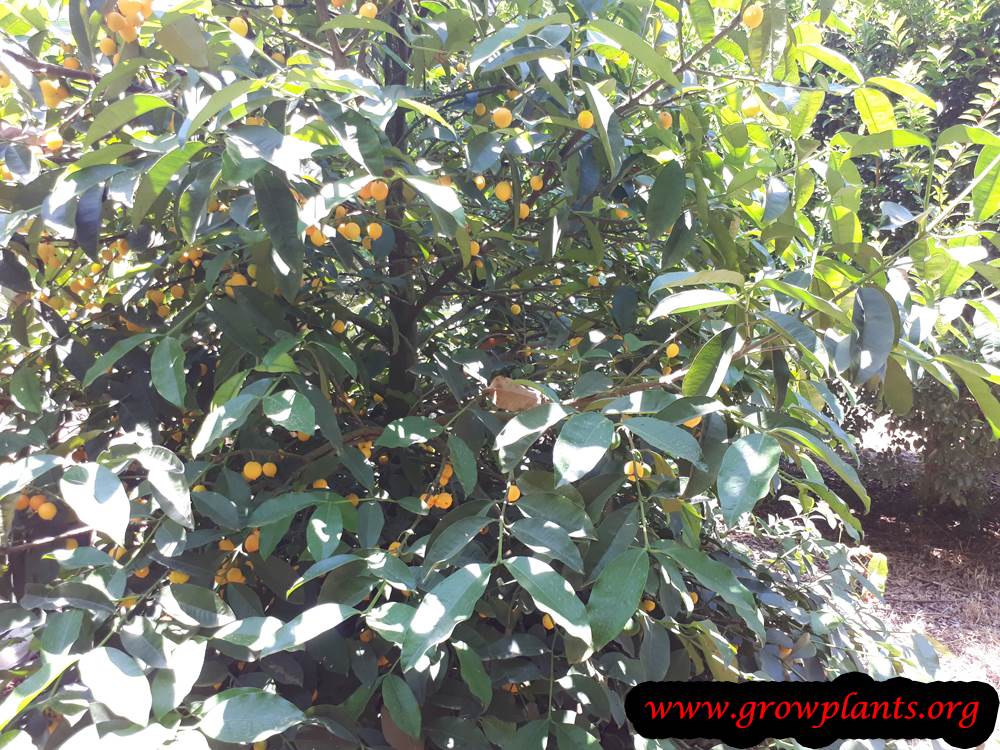
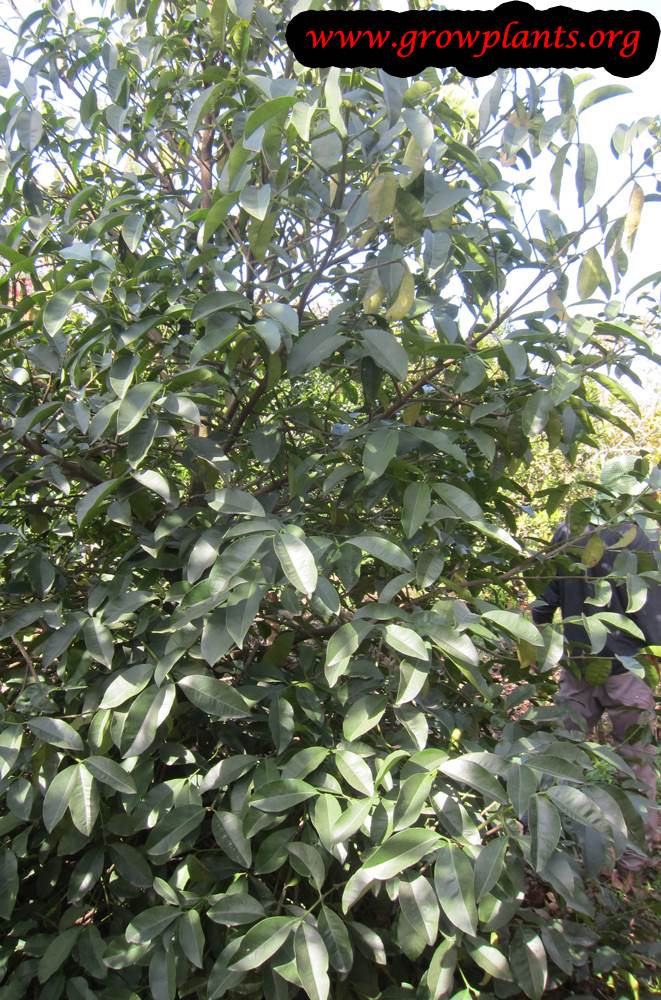
- Growth Habit & Form: Moderate-growing evergreen tree with a dense, rounded crown.
- Lifespan & Maturity: Long-lived, usually beginning to fruit about 3–4 years from planting.
Anatomy & Physical Features
- Trunk & Bark: Woody stems that exude a sticky latex when cut.
- Leaves & Foliage: Glossy green, elliptic, leathery leaves.
- Flower Characteristics: Small white flowers with a yellowish centre, clustered on the branches (bee-pollinated).
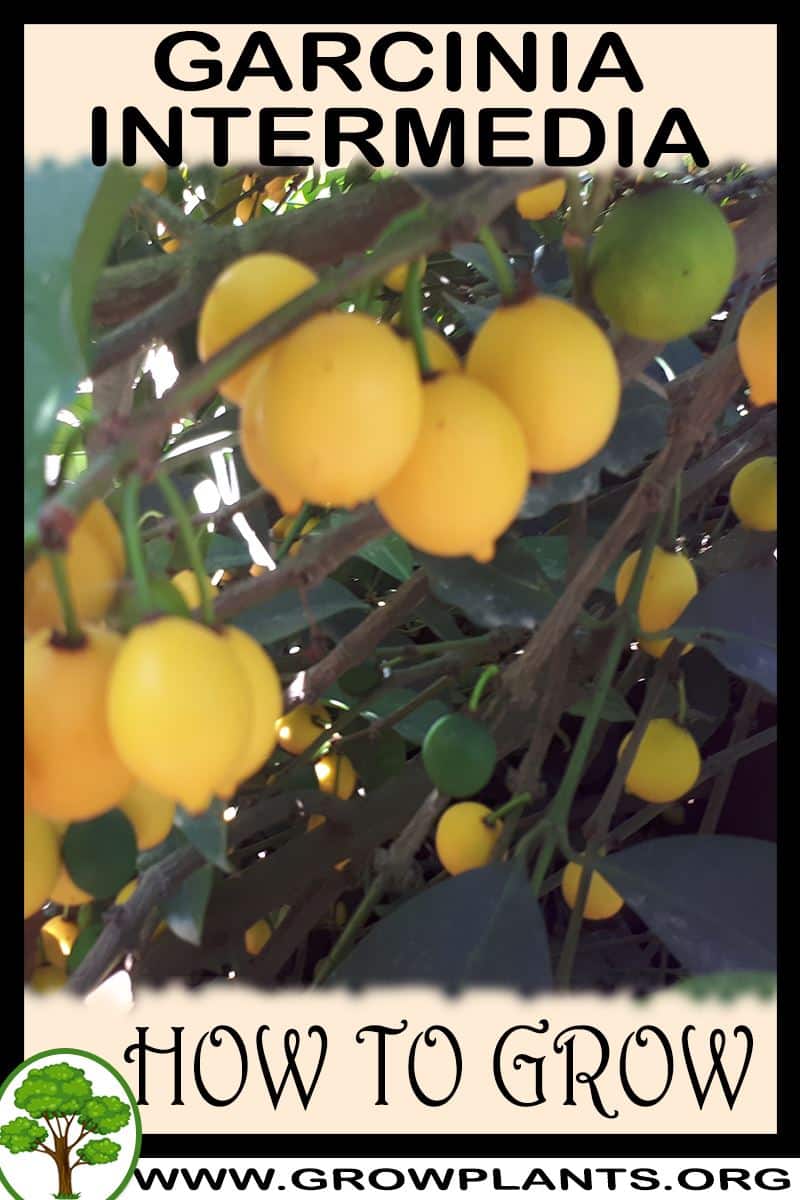
- Fruit Profile: Rounded orange fruit 1–5 cm across, with sweet, slightly sour flesh.
Primary Uses & Landscape Value
- Edible Uses: Fruit eaten fresh or made into jams and juice.
- Functional & Ornamental Roles: Ornamental fruiting evergreen for frost-free gardens; container-suitable.
Care Guide: Planting, Soil & Watering
Overview: Garcinia intermedia (lemon drop mangosteen) is a tropical to warm-subtropical fruit tree for full sun. It needs rich, well-draining soil and moderate to generous, consistent moisture.
Quick Care Requirements
| Requirement | Ideal Condition |
|---|---|
| Planting Season | Spring to summer; year-round in the tropics |
| Growth Rate | Moderate |
| Soil Type | Rich, well-draining soil |
| Water Need | Moderate to high — keep consistently moist |
Planting & Establishment
- Best Planting Season: Plant in spring or summer, or year-round in a true tropical climate.
- How to Plant:
- Hole Preparation: Dig a hole wider than the root ball to loosen the surrounding soil for the roots.
- Soil Amendments: Blend in compost or well-rotted organic matter to enrich the soil while keeping it free-draining.
- Planting Depth: Set the plant so the root collar sits level with the surrounding soil; do not bury the stem or crown.
- Growth Speed & Expectations: A moderate grower that develops into a tree of about 2–5 m (7–16 ft).
Soil, Watering & Drainage Care
- Soil Mix & Drainage Needs: Use rich, well-drained soil; the tree resents waterlogging but should also never be allowed to dry out.
- Watering Schedule & Technique:
- Young / Newly Planted: Water frequently to keep the soil consistently moist while the young tree establishes.
- Established: Water moderately but regularly, keeping the root zone from drying out.
- Seasonal Adjustments: Water more in hot, dry spells and reduce in cool weather.
Climate, Light & Hardiness
Garcinia intermedia (lemon drop mangosteen) is a tropical-to-warm-subtropical fruit tree that needs full sun and essentially frost-free conditions to thrive. It is only reliably grown outdoors from USDA zone 10b southward.
Quick Climate Specifications
| Climate Zones | Tropical, warm subtropical, warm mediterranean |
|---|---|
| USDA Hardiness Zones | 10b+ |
| Cold Damage Begins | Typically above 0°C (32°F) for young or tender growth, as is common for this group of tropical fruiting trees |
| Approx. Survival Minimum | Established trees may briefly tolerate light chilling, but hard freezing is generally fatal; cold tolerance varies by age and exposure duration |
| Frost Tolerance | Very Low |
| Light Conditions | Full Sun |
Sunlight & Light Exposure
Optimal Light Setup
Full sun is required for healthy growth, flowering, and fruit set.
Direct Sun Requirement
Needs strong, direct sun for most of the day.
Best Exposure / Orientation
An open, unobstructed, south-facing planting site (in the northern hemisphere) maximizes sun exposure and warmth.
Temperature Extremes & Hardiness
USDA Hardiness & Regional Limits
Outdoor culture is limited to USDA zone 10b and warmer, reflecting its tropical-to-warm-subtropical origin; further north it can only be container-grown with winter protection.
Cold Damage & Winter Protection
As with many tropical fruiting trees, young plants are more cold-sensitive than established specimens; protect young trees from any chill and bring container-grown plants under cover before cold weather.
Frost Sensitivity
Frost-sensitive; even light frost can damage foliage and set back growth.
Extreme Heat Tolerance
Good in warm subtropical and tropical heat when watered adequately (the site notes it wants average to large amounts of water).
Wind, Humidity & Microclimate
Humidity Preferences
Suited to the humid conditions typical of tropical and warm subtropical climates.
Microclimate Recommendations
A warm, sheltered, sunny site away from cold air pooling helps protect this frost-tender tree, especially while young; a south-facing wall can add useful extra warmth in marginal zone 10b locations.
Growing in Pots, Balconies & Indoors
Lemon drop mangosteen (Garcinia intermedia) is a tropical fruit tree of 2-5 m. The grower notes it is not an indoor houseplant, but it can be grown in a large container – especially while young – on a sunny patio in a warm climate.
Quick Details
- Container Size: A large, deep pot; pot up as the young tree grows
- Indoor Suitability: Not a houseplant – it is a full-sun fruit tree
- Best Spot: Full sun, warm and frost-free
- Soil & Drainage: Rich, free-draining mix
- Watering in Pots: Average to generous; keep moist in warmth but never waterlogged
Indoors & On the Windowsill
- Houseplant limits: The grower marks it as not for indoors – it needs full sun and warmth, and even a bright sill cannot support a fruiting tropical tree.
- Overwintering: In cool climates keep it potted and move it to a bright, frost-free space over winter, returning it outside once it is reliably warm.
On a Balcony or Patio
- Light & wind: Give it the warmest, sunniest, most sheltered spot. As a tender tropical it resents cold and wind; a large pot is heavy, so place it before filling.
Choosing the Pot, Soil & Long-Term Care
- Pot & drainage: A pot with strong drainage holes is essential; skip a permanently full standing-water saucer to avoid root rot. Terracotta breathes and dries faster, while glazed or plastic holds moisture longer.
- Potting mix: Rich, organic and free-draining.
- Feeding: Potted plants need feeding more often than those in the ground, since watering steadily leaches nutrients out of the container.
- Repotting: Pot up as it grows and refresh the mix every couple of years; it is a container plant only while young.
Growing this plant in a greenhouse
A greenhouse can give garcinia intermedia frost protection, cold protection, humidity control and extra warmth.
Greenhouse at a glance
| Greenhouse suitability | Conditional - depends on your climate |
|---|---|
| Main benefits | frost protection, cold protection, humidity control, extra warmth |
| Season extension | earlier spring & later autumn |
| Outdoor protection advisable below | about 10°C |
| Maintain greenhouse minimum | around 15°C for active growth |
| Suitable types | heated greenhouse, polycarbonate greenhouse |
| Heating | Heating is recommended in cold climates for continuous growth. |
Related greenhouse guides
- Greenhouses: How to Choose the Right Greenhouse
- Best Greenhouse Heaters
- Greenhouse Climate Control: Temperature, Ventilation and Humidity
- Polycarbonate Greenhouses: What to Look for Before Buying
Fertilizing & Feeding
Moderate – a slow-to-medium growing tropical fruit tree; steady, modest feeding through establishment and into bearing supports healthy growth without pushing excess vegetative growth at the expense of fruit.
Quick Fertilizing Specs
| Feeding Level | Moderate – a tropical fruit tree that benefits from steady, modest feeding rather than heavy doses. |
|---|---|
| young_feeding | Frequent light feedings to build a strong young tree. |
| mature_feeding | Balanced feeding through the growing season, shifting toward potassium as fruit develops. |
| Main Nutrient Priority | Nitrogen while the tree is young and building its canopy, then balanced nutrition with attention to potassium once bearing. |
| Best Feeding Period | Through the warm growing season, tapering off going into cooler or drier months. |
| Organic Options | Compost or well-rotted organic matter worked into the root zone. |
| Soil pH | Prefers well-drained soil; tolerates a range but avoid poorly drained, waterlogged ground. |
| Reduce/Stop Feeding | Ease off feeding as growth slows in cooler weather or after harvest. |
| Micronutrients | Iron, manganese and zinc are commonly supplied by a complete fruit-tree fertilizer; correct boron only if flowering or fruit-set problems point to it. |
Feeding by Growth Stage
Newly planted
Help a young tree establish roots without overwhelming it with nutrients.
| Nutrient direction | A light, balanced feed once initial rooting begins; avoid heavy fertilizing right at planting. |
|---|---|
| Timing | In the first growing season after planting, once the tree shows signs of new growth. |
| Frequency | A few light feedings through the first season, rather than one heavy application. |
| Fertilizer types | Light balanced complete fertilizer, Compost or well-rotted organic matter |
| Precautions | Hold feeding back until new roots are active rather than fertilizing right at planting; keep any feed away from direct contact with the trunk. |
Young tree, building the canopy
Push steady vegetative growth to build a strong framework of branches and foliage.
| Nutrient direction | A nitrogen-forward complete fertilizer to support vigorous canopy development. |
|---|---|
| Timing | During the tree’s early years of active growth, before it begins bearing. |
| Frequency | Regular light-to-moderate feeding through the growing season. |
| Fertilizer types | Nitrogen-forward complete fruit-tree fertilizer, Compost or well-rotted organic matter |
| Routine trace nutrients | iron, manganese, zinc |
| Precautions | Keep feeding steady rather than sporadic; avoid heavy single applications that can burn young roots. |
Established, approaching bearing age
Maintain steady growth as the tree matures toward its first fruit.
| Nutrient direction | A balanced complete fertilizer, moderating the strong nitrogen emphasis of the young-tree stage. |
|---|---|
| Timing | As the tree matures and approaches the age at which it typically begins to bear fruit. |
| Frequency | Regular moderate feeding through the growing season. |
| Fertilizer types | Balanced complete fruit-tree fertilizer |
| Routine trace nutrients | iron, manganese, zinc |
| Precautions | Avoid excess nitrogen at this stage, which can delay the shift into fruiting by favoring leafy growth. |
Mature, bearing fruit
Support consistent fruit production without sacrificing tree vigor.
| Nutrient direction | A balanced complete fertilizer with attention to potassium as flowering moves into fruit development. |
|---|---|
| Timing | Through the growing season, with feeding timed around flowering and fruit development. |
| Frequency | Regular moderate feeding through the growing season, easing off as harvest approaches and after harvest. |
| Fertilizer types | Balanced complete fruit-tree fertilizer with attention to potassium |
| Routine trace nutrients | iron, manganese, zinc |
| Precautions | Avoid heavy nitrogen close to fruit set, which can favor foliage over fruit and reduce fruit quality. |
Nutrient Deficiency Signs & Corrections
Pale green to yellowish leaves overall and reduced shoot growth.
| Possible causes | Low soil nitrogen, Poorly drained or waterlogged soil limiting root function, Root competition from nearby turf or plantings |
|---|---|
| Appears first on | Older leaves throughout the canopy first. |
| What to check | Recent feeding history, Soil drainage around the root zone, Competing vegetation near the trunk |
| Possible correction | Resume a balanced or nitrogen-forward complete fertilizer appropriate to the tree’s stage and improve drainage if the root zone stays wet. |
Yellowing between the veins of the newest leaves while the veins stay green.
| Possible causes | High or alkaline soil pH locking up iron or manganese, Overly wet or cold roots reducing micronutrient uptake, Genuinely low available iron or manganese in the soil |
|---|---|
| Appears first on | New growth at the branch tips. |
| What to check | Soil pH, Drainage and recent watering, Whether older leaves remain green |
| Possible correction | Correct soil pH toward a more favorable range, improve drainage, and if it persists apply a chelated iron or manganese product per its label. |
Good flowering but little fruit actually developing and maturing.
| Possible causes | Boron deficiency affecting flower and fruit development, Poor pollination conditions during bloom, Water stress or irregular watering during flowering and early fruit development |
|---|---|
| Appears first on | The current season’s flowers and young fruit. |
| What to check | Watering consistency through bloom and early fruit set, Pollinator activity during flowering, Whether the tree otherwise shows healthy, vigorous growth |
| Possible correction | Keep watering consistent through bloom, and only if boron deficiency is confirmed apply a boron-containing product carefully per its label, since the margin between too little and too much boron is narrow. |
Leaf edge browning, wilting despite adequate soil moisture, or stunted new growth.
| Possible causes | Over-application of fertilizer, Root stress from poor drainage or waterlogging, Root disturbance from recent transplanting or nearby digging |
|---|---|
| Appears first on | Leaf margins and the newest growth. |
| What to check | Recent fertilizer amounts, Soil drainage, Any recent root disturbance near the tree |
| Possible correction | Ease off feeding, water thoroughly to help flush excess salts, and improve drainage around the root zone. |
Pruning, Training & Seasonal Maintenance
Garcinia intermedia tolerates only light pruning and grows into a naturally well-shaped small tree with little intervention, so the main objective is size control (keeping it manageable at 2–5 m) and dead-wood removal rather than reshaping. The safest window is winter, after summer harvest and outside the spring flowering period, since flowers and later fruit form in clusters on existing branches and heavy cutting removes wood that would otherwise flower. Because the tree is already slow to medium growing and takes 3–4 years to bear its first crop, aggressive pruning can meaningfully delay or reduce fruiting.
Quick Pruning & Maintenance Specs
| Pruning Tolerance | Low to Moderate – light maintenance only, avoid heavy cuts |
| Primary Pruning Window | Winter (post-harvest, before spring flowering) |
| Typical Frequency | Once a year, or as needed for dead wood |
| Main Objective | Keep the tree at a manageable, harvestable size; remove dead branches |
| Young Plant Priority | Minimal intervention – let the naturally symmetrical form develop |
| Mature Plant Priority | Height/size containment and sanitation of dead wood |
| Best Tool Type | Bypass secateurs and loppers for most cuts; a pruning saw for larger dead limbs |
| Avoid Heavy Pruning During | Spring flowering and summer fruit development/harvest |
Pruning by Plant Age & Size
Newly Established
Young, seed-grown trees need essentially no formative cutting – remove only obviously damaged growth from transplanting; grafting is not used for this species, so there is no rootstock/scion union to manage.
Young / Formative
No artificial training system (central leader, vase, etc.) needs to be imposed – Garcinia species typically develop a naturally well-proportioned single-trunk form on their own. Limit formative work to removing any weak, crossing, or damaged shoots.
Mature / Established
Once bearing, prioritise heading back overly tall growth to keep fruit within reach and removing dead or diseased wood, while leaving the bulk of the flowering/fruiting branch framework intact.
Seasonal Pruning Schedule
| Winter (dormant/post-harvest) | Objective: size control and sanitation. Remove: dead branches, and selectively head back overly vigorous growth to keep the tree “small” as noted for this species. Do not remove: healthy branch clusters that will flower in spring. Response: renewed flowering wood the following spring. Fruiting impact: minimal if kept light; heavy winter pruning reduces the branch clusters available to flower. |
| Summer (fruit harvest) | Objective: harvest access only. Remove: nothing structural – this is a picking period, not a pruning period. Do not remove: any fruiting wood. Response: n/a. Fruiting impact: cutting now sacrifices ripening/ripe fruit. |
Flowering & Fruiting Wood
Flowers form in clusters directly on existing woody branches, with fruit following from spring flowers through to summer harvest. Because the tree flowers on branches that are already part of its permanent framework rather than on vigorous new shoots, removing large amounts of that branch structure – especially in late winter close to flowering – directly reduces the coming season’s crop. Prune conservatively and only after harvest is complete.
Structural Pruning & Training
Structural intervention is mostly limited to removing crossing or rubbing branches and controlling overall height/spread, since the species’ natural form is already fairly balanced; canopy thinning for airflow is rarely needed unless growth has become unusually dense.
Special Growth to Remove
- Dead branches – the primary and most consistently needed cut for this species.
- Weak or crossing branches on young trees – remove early to avoid rubbing wounds later.
Container & Small-Space Pruning
Where grown in a large container, height/size control becomes the main pruning task even earlier than in-ground, since limited root volume compounds the effect of the tree’s naturally slow growth; avoid combining hard pruning with root restriction in the same season.
Tools
- Bypass secateurs for small twigs and dead shoots.
- Loppers for medium dead or crossing branches.
- Pruning saw for larger dead limbs on established trees.
Tool Hygiene & Disease Risk
Increased risk: this species exudes latex sap from cuts, which gums up blades and, left uncleaned, can attract dirt into fresh wounds; wipe blades clean of sap between cuts and avoid pruning during prolonged wet weather when cut surfaces are slower to dry and more prone to decay entering the wound.
Cut Placement & Technique
Make cuts just outside the branch collar rather than flush to the trunk, and avoid leaving long stubs which are more likely to die back given the tree’s latex and slow healing; for larger dead limbs, stage the cut (undercut first) to prevent bark tearing.
Heavy Pruning & Rejuvenation
Not recommended: heavy or rejuvenation-style pruning is not well tolerated by this slow-growing species and risks a prolonged setback to an already 3–4-year path to first fruit; keep any size-reduction work light and spread over successive winters rather than done in one hard cut.
Post-Pruning Care
Avoid fertilizing immediately after pruning since this can push soft vegetative flush at the expense of the next flowering; watch cut surfaces for dieback in humid weather and keep the root zone evenly watered, particularly for young or recently container-grown trees.
Common Pruning Mistakes
- Pruning heavily in late winter right before spring flowering, removing wood that would have produced the summer crop.
- Cutting during or just before fruit development, sacrificing the current harvest.
- Leaving sap-oozing cuts uncleaned, inviting dirt and slower wound closure.
When Not to Prune
Avoid pruning during spring flowering and through summer fruit development/harvest; also avoid pruning in prolonged wet weather when latex-oozing wounds are slower to dry.
Recommended Tools (by task)
- Dead twigs and small shoots – bypass_secateurs: clean small cuts for routine sanitation.
- Medium dead or crossing branches – loppers: extra reach and cutting power without a saw.
- Larger dead limbs on an established tree – pruning_saw: needed once branch diameter exceeds what secateurs/loppers can cleanly cut.
Pruning Troubleshooting
| Problem | Possible Cause | What to Check | Corrective Action |
| Dieback at cut sites | Pruning during humid/wet weather; sap-fouled tool left uncleaned | Timing of last prune relative to weather; blade condition | Reschedule for a drier winter period; clean latex from blades between cuts |
| Reduced or absent fruiting after pruning | Over-pruning removed flowering branch clusters | Severity/timing of the last prune relative to spring flowering | Scale back to light, dead-wood-only pruning in future winters |
| Vigorous leafy regrowth but little flowering | Heavy cutting forced a vegetative flush at the expense of flower buds | Recent pruning severity | Avoid hard cuts; switch to light, frequent maintenance instead of infrequent heavy pruning |
Propagation Guide
Garcinia intermedia (Lemon drop mangosteen) is grown mainly from seed; grafting is not required for this species and named-cultivar selection is not a major feature of its cultivation. Because tropical Garcinia seed tends to be short-lived and seedlings can be slow and uneven to establish, this tree is best rated a moderate propagation project.
Quick Propagation Specs
| Best Propagation Method | Seed |
| Alternative Methods | Air layering (to reproduce a particularly good individual tree, uncommon) |
| Propagation Difficulty | Moderate |
| Seed True-to-Type | Variable — seedling consistency is not guaranteed for this species |
| Best Propagation Season | Spring to summer; year-round in fully tropical climates, per the site’s planting season |
| Seed Germination Time | Can be slow and irregular, often several weeks or more |
| Germination Temperature | Warm, roughly 24-30°C (75-86°F), typical for tropical fruit tree seed |
| Seed Sowing Depth | Shallow, just covering the seed |
Growing from Seed
Seed Handling & Viability
Like many tropical Garcinia relatives, seed viability likely declines fairly quickly once dried out, so sow fresh seed rather than storing it long-term.
Sowing Season
Spring through summer, or year-round in the tropics, matching the site’s own planting season for this tree.
Sowing Depth & Orientation
Sow shallowly, just covering the seed, in a well-drained mix.
Germination Conditions
Warm, humid conditions favor germination; keep the medium consistently moist without waterlogging, in line with the tree’s preference for well-drained soil.
Germination Time
Expect slow, sometimes uneven germination over several weeks or more.
Seedling Care
Young plants exude the same latex sap the site notes as a difficulty in mature trees; handle roots and cut stems gently to limit sap loss and mess while seedlings establish.
Air & Ground Layering
Why It Is Used
Air layering lets a grower reproduce one particularly good-fruiting tree exactly, though the site confirms this is not necessary for the species and it is far less common than growing from seed.
Preferred Method & Season
Wound or girdle a section of a semi-hardwood branch, wrap it with moist sphagnum moss and plastic, and carry this out during the warm growing season.
Rooting Time
Root formation is typically slow, often taking a few months given the tree’s medium growth rate and latex sap.
Separation Timing
Sever and pot up once a good root mass has formed, then keep the new plant shaded and humid until it is established.
Bloom & Flower Guide
Quick Details
- Bloom Season: Spring
- Flower Appearance: Small white flowers with a yellowish centre, clustered along the woody branches
- Edibility: The flowers are not eaten; grown as an ornamental and productive tree
Detailed Blooming Overview
In spring this small tropical tree sets clusters of neat white flowers directly along its woody stems and branches. Each bloom is modest – white with a soft yellow eye – but they gather in numbers and draw bees, which handle the pollination.
Flower Characteristics
- White petals with a yellowish inner eye.
- Borne in clusters on the woody branches.
Bloom Care & Thinning
- Pollination: Bees are the main visitors – a calm, insecticide-free canopy at bloom time supports a good set.
- Warmth and shelter: Protect the spring flowers from cold snaps and drying wind.
- Steady moisture: Even watering through flowering keeps the blooms opening evenly.
Fruit & Uses
Garcinia intermedia (Lemon drop mangosteen, Mameyito) is grown for its small orange fruit, which has a sweet-with-sour flavor. The fruit is eaten fresh out of hand and is also processed into jams and juice.
Quick Edible Specs
| Edible Parts | Fruit |
| Main Use(s) | Culinary – fresh eating, jams, juice |
| Eaten Raw or Cooked | Raw (fresh eating); cooked when made into jam |
| Preparation Required | None to eat fresh; wipe away any sticky latex/sap from the rind before handling |
| Harvest Season | Summer |
| Time to First Harvest | Several years after planting – see the plant’s general growth information for the qualitative timeline |
| Storage | Best used soon after picking, or preserved as jam or juice for longer keeping |
| Safety/Toxicity Caveat | The plant exudes latex (noted as a growing difficulty); the fruit itself is eaten raw with no reported toxicity, but the sticky sap common to this genus can be irritating on skin, so handle picking and cutting with care |
Fruit
The small (1-5 cm), orange, sweet-and-sour fruit ripens in summer. Once fully colored orange and soft, it can be picked and eaten raw, or used to make jams and juice. Fruit flies are a noted pest, so fruit fly traps are recommended as the main harvest-time work; birds are also drawn to the ripening fruit.
Harvesting
Harvest in summer as fruits turn orange and soften; because fruit flies and birds both target the ripening crop, timely picking and the use of fruit fly traps help secure a usable harvest.
Preparation, Uses & Safety
Ripe fruit is eaten fresh, or processed into jams and juice when a larger quantity is on hand. The plant’s latex/sap, referenced as a general growing difficulty, is a sticky, potentially skin-irritating exudate typical of the Garcinia genus (relatives of mangosteen) – rinse or wipe fruit and avoid contact with cut stems or the fruit’s outer rind if it feels gummy, but this does not affect the edibility of the ripe flesh itself.
Pests, Diseases & Troubleshooting
Overview: Garcinia intermedia is a slow-growing tropical evergreen that is relatively free of serious insect pests but highly sensitive to water-related root and fruit disorders. Its leathery leaves and thick-rinded fruit resist most chewing pests, so the real risks are sap-suckers on young flush, Phytophthora in wet or poorly drained soil, and physiological fruit disorders from erratic watering. Manage it culturally first: sharp drainage, steady moisture, light shade when young, and warm, frost-free conditions.
Quick Troubleshooting Overview
| Issue / Pest | Main Symptom | Primary Solution |
|---|---|---|
| Thrips | Silvery scarring and distortion on young leaves and fruit | Encourage predators; horticultural oil / spinosad on flush only |
| Scale & mealybugs | Sticky honeydew, black sooty mould on leaves | Wipe off, release beneficials, horticultural oil |
| Spider mites | Fine stippling and webbing in hot, dry air | Raise humidity, hose foliage, miticidal oil |
| Fruit flies | Maggots/rot in ripening fruit; birds strip fruit | Bag fruit or bait traps; harvest promptly; netting |
| Phytophthora root/fruit rot | Wilting, bark canker, oozing; fruit rot | Improve drainage; avoid waterlogging; copper/phosphonate |
| Anthracnose | Dark sunken spots on leaves and fruit | Prune for airflow, sanitation, copper fungicide |
Common Pests & Management
- Thrips (Scirtothrips / Thrips spp.):
- Symptoms: Rasping insects that scar new leaves and the skin of young fruit, leaving silvery, corky patches and distorted growth. Damage concentrates on the tender flush; look for tiny slender insects and black frass on leaf undersides.
- Prevention & Control: Keep trees vigorous and lightly shaded so flushes harden quickly. Conserve predatory mites, lacewings and minute pirate bugs. Hang blue sticky traps to monitor. If populations spike on new growth, spot-treat with spinosad or horticultural oil in the evening to protect pollinators; avoid blanket spraying a tree in flower.
- Soft scale & mealybugs (Coccus spp., Planococcus citri):
- Symptoms: Immobile brown scale bumps along midribs and stems, or white cottony mealybugs in leaf axils and on roots. Both excrete honeydew that fuels black sooty mould and attracts ants.
- Prevention & Control: Wipe small colonies off with a damp cloth or dab mealybugs with alcohol. Control ants that farm and protect them. Release ladybirds, lacewings or parasitic wasps. For heavier infestations, coat thoroughly with horticultural or neem oil, repeating to catch crawlers; a systemic is a last resort on non-bearing trees only.
- Spider mites (Tetranychus spp.):
- Symptoms: Fine pale stippling, bronzing and delicate webbing on leaf undersides, worst on trees stressed by hot, dry air or dusty conditions.
- Prevention & Control: Raise humidity, keep foliage dust-free and hose down the canopy. Conserve predatory mites (Phytoseiulus). Treat persistent outbreaks with a miticidal horticultural oil, covering undersides; rotate modes of action.
- Caterpillars & leaf-eating beetles (Lepidoptera / Chrysomelidae):
- Symptoms: Chewed notches and holes in tender new leaves, with frass; sporadic rather than chronic on established trees.
- Prevention & Control: Hand-pick, and encourage birds and predatory wasps. For flush-eating caterpillars, Bacillus thuringiensis (Bt) is a targeted organic option that spares beneficials.
- Fruit flies & birds (Bactrocera / Anastrepha spp.):
- Symptoms: Ripening fruit is stung, developing soft rotten spots and maggots; birds peck and strip the small sweet fruit of this species.
- Prevention & Control: Harvest promptly as fruit colours and clear fallen fruit that breeds flies. Bag developing fruit or use protein-bait and lure traps; net small trees against birds. Good orchard sanitation is the core control.
Diseases & Fungal Issues
- Phytophthora root rot & stem canker (Phytophthora spp.):
- Symptoms: The key killer in wet soils: wilting despite moist ground, dark oozing cankers at the base or on the trunk, root decay and general decline. Fruit in contact with wet mulch can also rot.
- Treatment & Management: Prevention is everything: plant on a raised mound in free-draining soil, never let the root zone waterlog, and keep mulch off the trunk. Remove and destroy cankered wood. Phosphonate (phosphorous acid) or copper drenches help protect suspect trees; correct drainage first.
- Anthracnose (Colletotrichum gloeosporioides):
- Symptoms: Dark, sunken spots on leaves, shoot tips and fruit, sometimes with pink spore masses in humid weather; can cause tip dieback and fruit blemish.
- Treatment & Management: Prune to open the canopy for airflow, remove infected leaves and fruit, and avoid overhead watering. Copper fungicide applied preventively in wet seasons keeps it in check.
- Pink disease & leaf/thread blights (Erythricium salmonicolor, Pestalotiopsis):
- Symptoms: Salmon-pink fungal crust on shaded branches with dieback (pink disease) in very humid tropics; grey-brown leaf blotches from other leaf-blight fungi.
- Treatment & Management: Prune out and burn affected branches back to healthy wood, thin the canopy to reduce humidity, and paint or spray cut surfaces with copper. Improve light penetration.
Growing Difficulties & Abiotic Problems
- Gamboge disorder & translucent flesh (fruit):
- Cause & Symptoms: Yellow gummy latex bleeding into the rind and flesh (gamboge), or glassy, water-soaked translucent segments, both driven by heavy rain or erratic irrigation during fruit development that causes rapid water uptake.
- Correction Strategy: Keep soil moisture steady with mulch and regular deep watering rather than drought-then-flood cycles. Improve drainage so roots are never saturated during ripening. There is no spray cure – even watering is the fix.
- Sunburn & leaf scorch on young trees:
- Cause & Symptoms: Seedlings and young trees are understorey plants that scorch in full tropical sun, showing bleached, brown-edged leaves.
- Correction Strategy: Provide 40-50% shade for the first few years, then acclimatise gradually to more sun. Protect from drying wind and keep well watered while establishing.
- Cold damage:
- Cause & Symptoms: Strictly tropical; growth stalls and leaves blacken or drop below roughly 4-5°C, and hard frost is fatal.
- Correction Strategy: Grow only in frost-free climates or as a large conservatory/greenhouse specimen. Keep above 10°C in winter and shelter from cold drafts.
- Nutrient deficiency & slow establishment:
- Cause & Symptoms: On poor or alkaline soils, leaves yellow (nitrogen, iron, magnesium) and the notoriously slow taproot resents disturbance, causing transplant sulk.
- Correction Strategy: Feed with a balanced fertiliser plus micronutrients; keep soil slightly acidic and rich in organic matter. Plant out young and disturb roots as little as possible.
What Helps – Products & Tools
Reach for horticultural and neem oils and insecticidal soap for scale, mealybugs, mites and thrips; Bacillus thuringiensis (Bt) for leaf-eating caterpillars; and blue or yellow sticky traps for monitoring. On the disease side, copper fungicide and phosphonate (phosphorous acid) drenches address anthracnose and Phytophthora. For fruit, use protein-bait fruit-fly traps and bird netting, plus a balanced fertiliser with iron and magnesium for chlorosis. Always follow the label and spray oils in the evening to protect pollinators.